The Story of Exile
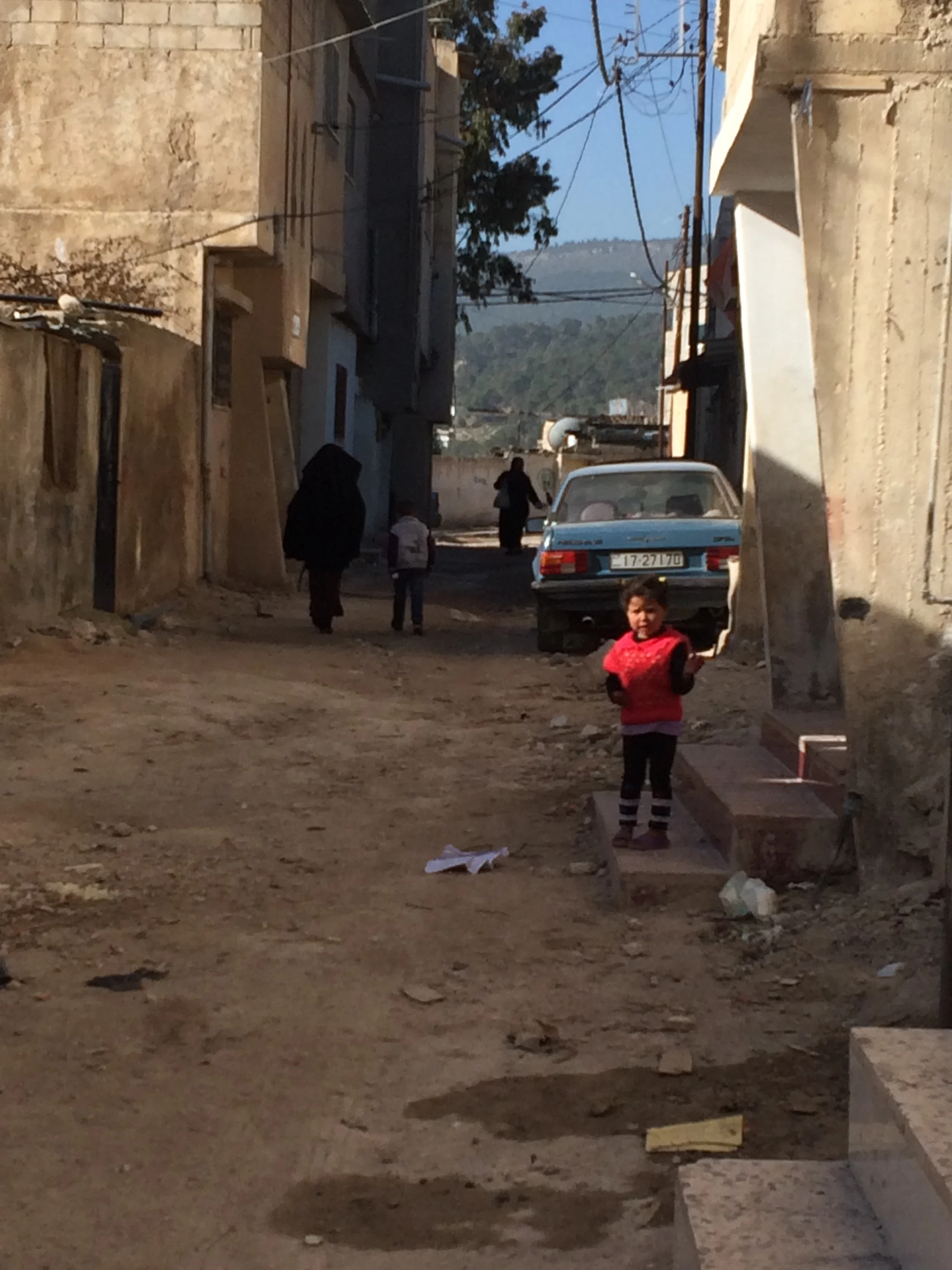
Gaza Palestinian Refugee Camp. Jerash, Jordan. December 2014.
The story of Palestinian refugees is one of exile.
For more than three-quarters of a century, generations have been born into refugee camps, denied basic rights and a political future. Decades of confinement have meant inadequate housing, limited access to education and healthcare, and severe restrictions on employment. Across host countries, Palestinian refugees are excluded from full participation in economic, political, and social life.
Exile is not temporary. It is a condition of prolonged limbo.
Across the region and beyond, Palestinian refugees face systemic discrimination and are often used as scapegoats for the political and economic failures of the states in which they reside—despite the fact that they did not choose displacement. They were forced from their homeland through fear and violence 78 years ago, and the consequences of that expulsion have never ended.
Without the protection of a nation-state, Palestinian refugees lack fundamental legal safeguards. Employment can be precarious or outright illegal. Access to higher education is often restricted or prohibitively expensive. Without stable income or legal security, the most basic question persists across generations: how does one build a life, raise children, or plan for a future under permanent uncertainty?
Exile means restrictions.
In most host countries, Palestinian refugees have little to no access to public services. There is no unemployment insurance, no social security, and limited or nonexistent access to public education and healthcare. Survival depends largely on international aid organizations, most notably the United Nations Relief and Works Agency for Palestine Refugees in the Near East (UNRWA).
Established by the United Nations in 1949, UNRWA was created to respond to the Palestinian refugee crisis—a crisis that has now persisted for more than 80 years. The agency provides essential services, including food assistance, schooling for children, healthcare, microloans, employment programs, emergency aid during war, and post-conflict rebuilding. Just as critically, UNRWA serves as a legal and political lifeline, preserving Palestinian refugees’ internationally recognized status.
Among these is the right of return—a fundamental principle of international law affirming that people have the right to return to their own country. This right is codified in the Universal Declaration of Human Rights and the International Covenant on Civil and Political Rights and is routinely invoked by refugees worldwide seeking safe return after forced displacement.
This context helps explain the sustained political attacks on UNRWA, including attempts to designate it as a terrorist organization. In January, the Israeli government demolished UNRWA’s headquarters in Jerusalem. The implications are profound. Without UNRWA, what legal protections or humanitarian infrastructure remain for Palestinian refugees?
For many, that is precisely the intention: to sever the last institutional lifeline, rendering Palestinian refugees administratively invisible.
I find this logic staggering. I have worked in refugee camps for 22 years and know UNRWA intimately. It is neither a terrorist organization nor a supporter of terrorism. UNRWA does not govern the camps; governance largely occurs through local popular committees and political factions. Yes, corruption exists within UNRWA—but corruption exists across nearly all humanitarian systems globally. Reform is necessary. Collapse is catastrophic. If UNRWA ceases to function, the most vulnerable Palestinian refugees will not survive.
Exile means vulnerability.
Yet exile has never erased Palestinian life. The story of displacement is not only one of loss, but of endurance. Resistance often takes the form of living—of honoring Palestine through daily acts of continuity. Despite the deprivation of camps that are now 78 years old, their narrow, overcrowded streets pulse with life: children playing, young people falling in love, weddings celebrated, elders mourned. Culture persists through joy, ritual, memory, and stubborn survival.
Exile means homesickness.
Years ago, we organized miswaars—field trips—for elderly women living in Beirut’s refugee camps. The aim was simple: to give them temporary relief from the congestion, pollution, and relentless confinement of camp life. When the bus stopped, the women instinctively dispersed into the surrounding landscape, gathering wild herbs, continuing a Palestinian tradition many women had practiced before them.
The story of Palestinian exile is vast, spanning continents and generations. Yet remarkably little is understood about the camps, daily life, or the distinct conditions Palestinian refugees face across different host countries. Indifference—and often deliberate ignorance—dominates international dialogue.
Exile means deafening silence.
Funding cuts to UNRWA, disarmament plans targeting Palestinian factions in Lebanon, the genocide in Gaza entering its third year, and the ongoing ethnic cleansing of Palestinians in the West Bank are not isolated developments. They are the cumulative outcomes of eight decades of exile, refugee status, and political abandonment.
Seventy-eight years of refugee status.
Four generations.
Fifty-eight refugee camps.
Multiple host countries.
More than six million permanent refugees.
As the story of exile continues, so does Palestinian culture.
Palestinian refugees continue to carry their heritage and culture into 2026.